

Google has invested billions into its ranking algorithm. Everyone in SEO claims to understand how it works.
But here's the thing: most businesses overcomplicate it.
After testing ranking factors across hundreds of sites for nearly 15 years, we've learned something that might surprise you. You don't need to master 200+ factors. You need to understand a few core principles and apply them consistently. That's really it.
This guide breaks down what actually matters and, maybe more importantly, what you should focus on first.
What Are Google Ranking Factors?
Google ranking factors are the signals and criteria that Google's search algorithm uses to evaluate, score, and rank web pages in search results.
When someone types a query into Google, the algorithm scans billions of pages and decides which ones to show and in what order. Ranking factors are how it makes those decisions.
Some examples include:
- Whether your content matches the search intent
- How many quality websites link to your page
- Whether your title tag contains the keyword
- How fast your page loads
- If your site works properly on mobile
- How authoritative Google considers your site
- The structure and organisation of your content
- User experience signals like bounce rate and time on page
Google has confirmed there are hundreds of these factors. But they don't all matter equally. Some carry significantly more weight than others.
And here's the complicated part — the importance of each factor shifts depending on the query type, the industry, and Google's constant algorithm updates. What matters most for ranking a local plumber is different from what matters for ranking a national ecommerce site.
The ranking factors themselves are like ingredients in a recipe. Google knows the ingredients but keeps the exact measurements secret. That's why SEO involves so much testing - to figure out which factors actually move the needle in real-world scenarios.
Core Google Ranking Factors

While Google uses hundreds of signals, these are the core factors that consistently impact rankings across all industries:
Content Relevance
Search intent match - Your content must answer what users are actually searching for. If someone searches "how much does an Apple MacBook cost from JB Hi-Fi", and you write about the history of Apple, you won't rank. Match the intent first.
Content quality - Content that ends the search query. Give the answer directly, then support it with additional detail if needed.
Keyword optimisation - Natural inclusion of target keywords in your content, titles, and headers without over-stuffing.
On-Page Signals
Title tags - The most important on-page element. Include your target keyword naturally.
Header structure (H1, H2, H3) - Organise your content logically so both users and Google understand the hierarchy.
Internal linking - Link related pages together to help Google understand your site structure and distribute authority.
Authority
Backlink quality - Links from authoritative, relevant sites in your industry carry significant weight.
Backlink quantity - More quality links generally mean more authority, but quality matters more than quantity.
Brand signals - Citations on directories, social profiles, and mentions across the web that show you're a legitimate business.
Technical Foundation
Mobile-friendliness - Google uses mobile-first indexing. Your mobile experience is what gets evaluated.
Page speed - Faster pages provide better user experience and send positive signals to Google.
Site security (HTTPS) - Secure sites are trusted more by both users and search engines.
Crawlability - Google needs to be able to access and understand your site structure.
User Experience
Click-through rate (CTR) - How often people click your result in search listings indicates relevance.
Dwell time - How long users stay on your page before returning to search results.
Engagement signals - Actions users take that indicate they found what they needed.
These core factors haven't fundamentally changed in years. What has changed is how much weight Google gives each one and the filters applied to prevent manipulation.
Why Google's Ranking Factors Don't Actually Change
People think Google's ranking factors change with every algorithm update. They don't. Well, not exactly.
Think of Google's algorithm like a sound mixing desk. You know those boards with dozens of knobs and sliders? Each one controls a different element - the bass, the treble, the mids, the volume.

Google's ranking factors work the same way. The factors themselves haven't really changed in 20 years. What changes is how much weight Google gives each one. It's subtle, but it makes all the difference.
Here's an example that shows this pretty clearly. Back in the day, you could stuff a keyword on your page 1,000 times and rank. You could even make the text the same colour as your background so visitors wouldn't see it. Ridiculous, right? But it worked.
Does keyword optimisation still work today? Yes. But Google turned down the dial. Now there's a filter. If you mention your keyword too many times, you trigger an over-optimisation penalty.
The same thing applies to backlinks. Spammy links still work in certain situations - we see it all the time. But Google has filters on them now. Build too many too fast, and the filter kicks in. Simple as that.
This is what core updates actually do. Google adjusts the filters up and down. Sometimes they use a sledgehammer and crush something that was working. Then they use a scalpel to fine-tune it back. It's like they're constantly tweaking the sound desk, trying to get the mix just right.
Understanding this changes everything. The basics that worked years ago still work today. You just need to stay within the boundaries of the filters. And honestly, that's not as hard as people make it sound.
Content Relevance: The Key to Ranking
You can't rank for "cat food" when your page talks about dogs.
This seems obvious, but it's where most sites fail. You'd be surprised how often we see this.
Google needs to understand what your page is about. If your content doesn't match the search intent, nothing else matters. You could have perfect technical SEO, hundreds of backlinks, and a fast-loading site. You still won't rank. It's frustrating, but that's how it works.
Theme Relevance Comes First
Before Google even considers your other ranking factors, it checks one thing: is this page relevant?
We've seen this mistake. A business thinks they're talking about a specific topic, but they sidestep just slightly. Then they wonder why they can't rank. It's usually something small that throws it off.
Real example from our work: We built a site for an electrician that ranked well for "electrician eastern suburbs Sydney." The client moved to another agency. That agency added "western suburbs" to the title tag as well, probably thinking it would help them rank for both. The rankings disappeared completely. Gone.
You need to narrow in on how Google interprets each keyword. Don't try to rank for everything on one page. It doesn't work like that.
How to Match Search Intent
Here's a simple test. If your page isn't showing up in the first 100 results after a few weeks (without any backlinks), your relevance is off. That's a red flag.
For most keywords, you should register within the first 3-10 pages on relevance alone. Everything else - backlinks, technical optimisation - that's what moves you up from there.
Want to know what Google thinks a keyword means? Type it into Google and look at the first page results. I know it sounds almost too simple, but it works.
Read the title tags. Read the meta descriptions. Look at what type of content appears. Are they product pages? Blog posts? Service pages?
If all 10 results are product pages, you won't rank with a blog post. If they're all informational articles, your service page won't work. Google's already decided what format that search term deserves.
Google pulls in descriptions from pages based on what it thinks matches the search. Study those snippets. They tell you exactly what to write about.
What "Quality Content" Actually Means
Every SEO article tells you to "create quality content." But what does that actually mean? It's one of those phrases that sounds helpful but leaves you wondering what to do.
Here's perhaps the simplest definition: quality content ends the search.
If someone searches "how much does this item cost" and you write 2,000 words about the history of pricing and factors to consider - that's not quality. It doesn't answer the question. It might be well-written, sure. But it's not what people want.
But if you have one paragraph that says "This item costs $14 in Melbourne" - that's quality. It ends the search. Done.
That's the content that gets pulled into featured snippets. That's what gets pulled into AI results. That's what ranks.
All the supporting content about pricing factors and history? That helps build theme relevance and authority. But your main content needs to answer the intent directly. Get to the point first, then you can expand if it makes sense.
The best answer gets the highest ranking. All the other ranking factors determine how high you go, but answering the question best gives you the best chance.
Why AI SEO Add-Ons Often Miss the Ranking Mark
AI SEO tools and website plug-ins can be useful assistants, but they are not a shortcut to rankings. Google is increasingly good at identifying real, helpful content versus content created purely to manipulate keywords.
Many AI SEO add-ons focus on:
- Keyword density
- Repeated phrases
- Generic AI-written paragraphs
- Pre-installed "SEO packages" that apply the same rules to every page
The problem is that Google can spot this easily. Keyword stuffing, templated AI content, and surface-level optimisation are all signals Google actively works to devalue.
What these tools often don't do is the most important part of SEO:
- Analyse the first page of results (SERP)
- Understand search intent (informational, commercial, transactional, local)
- Identify what Google already believes is relevant
- Match content depth, format, and angle to what is actually ranking
If your content does not align with search intent and relevance, no amount of AI-generated optimisation will save it.
In fact, poorly implemented AI SEO can do more harm than good, especially when it produces:
- Thin, repetitive content
- Pages written for algorithms instead of users
- Keyword-heavy copy with no real insight or authority
Why SERP-First SEO Wins

To rank consistently, you need to:
- Read the SERPs
- Understand why the top results are ranking
- Identify content gaps and expectations
- Create content that is genuinely more useful, not just more optimised
AI should support this process, not replace it.
The sites that win are the ones that combine:
- Human judgement
- Intent analysis
- Real expertise
- Strategic AI assistance (not automation)
That's the difference between using AI for SEO and doing SEO properly in an AI-driven world.
On-Page Optimisation: Where the Basics Still Count
You've got relevant content. Now you need to optimise it properly.
This is basic SEO, but it still works. Your title tag, your H1, your images - they all need to align with what you're trying to rank for.
If your title tag doesn't match your target keyword, you're not sending a strong signal to Google. It's that simple. Maybe too simple for some people to believe, but we test this stuff constantly.
The Basics Still Matter
Here's what you need to get right:
Title tags. This is the most important on-page signal. Include your target keyword naturally. Don't force it, but make sure it's there.
H1 tags. Should match your title tag and target keyword.
Meta descriptions. Won't directly improve rankings, but affects click-through rates. So it matters indirectly.
Image alt text. Describe your images and include relevant keywords where natural.
Internal linking. Link to related pages on your site with descriptive anchor text.
These are SEO 101 tactics. But we still see sites getting them wrong. All the time, actually.
In some non-competitive industries (especially local businesses), getting these basics right is all you need to reach the top three results. I've seen it happen in less competitive spaces where nobody's really trying.
Structure Your Site Like a Book

Your homepage is like the title page of a book. It tells the overarching story of what your business does.
Each service or product page is like a chapter. It goes deep into one specific aspect. You wouldn't put the entire book on the cover, right? Same principle here.
If you're a plumber, your homepage says, "We're a plumbing company serving [area]." Your service pages say "We specialise in hot water systems" or "We specialise in bathroom renovations."
Google knows you're a plumber. But it doesn't know you do hot water systems unless you have a dedicated page for it. You have to spell it out.
Your hot water systems page will rank for hot water searches. Your homepage won't. That's just how it works.
Don't try to rank your homepage for every service you offer. Build landing pages for each one. It takes more work upfront, but it's worth it.
Authority and Backlinks: Real vs. Ideal
Google wants to rank authoritative businesses. How does it determine authority? Largely through backlinks.
The ideal scenario (according to Google): you create amazing content and other websites naturally link to it because it's so valuable.
The reality: this only works in certain industries. And I think that's important to acknowledge.
When Natural Link Building Works
Take a naturopath who writes about hormonal health for women. There are thousands of health and lifestyle blogs that cover similar topics. If the content is genuinely helpful, those sites might link to it naturally. It happens.
That's an industry where natural link building can work. You write good stuff, people find it, they share it.
When It Doesn't Work
Now, take a company that provides lubrication for industrial machinery. How much can you write about that topic that other sites will want to share?
People will want to know about it. But you don't have thousands of blogs around the internet discussing machinery lubrication. It's just not a sexy topic that people naturally link to.
In industries like this, natural link building is nearly impossible. You can write the best content in the world about industrial lubrication, and nobody's going to be excited enough to link to it. That's the reality.
What Actually Happens
In SEO, most backlinks come from outreach, not natural discovery. Agencies contact relevant sites and negotiate placements. Sometimes you pay, sometimes you exchange value, sometimes you just ask nicely.
This isn't "natural" in Google's ideal sense. But it works. And it's how the industry operates. Everyone does it, even if they don't always admit it.
The ranking factor is still the same: backlinks from authoritative sites pass authority to your site. Google's filters just determine how much each link counts.
Show Google You're a Real Business
For local businesses, especially, you don't need complex link-building strategies. Not at first, anyway.
Start with the basics:
- Get a Google Business Profile
- Create social media profiles (Facebook, Instagram, YouTube)
- List your business on citation sites (True Local, Hot Frog, etc.)
- Get listed on industry-specific directories
These are all signals that tell Google you're a legitimate business. They build authority and help with local rankings. Not the most exciting work, but it matters.
For most local businesses, these foundational links plus proper on-page optimisation are enough to rank well. You don't need to overthink it.
Technical SEO: Remove the Ranking Handbrake
Technical SEO doesn't determine if you rank. But it determines how fast you move up.
Think of it like a handbrake on a car. Taking it off doesn't make the car go. But it lets the car roll freely when you apply the gas. Maybe not the perfect analogy, but it gets the point across.
We've seen slow sites outrank fast sites when everything else is done right. So technical SEO isn't the first priority. It's just not.
But it matters. Especially as things get more competitive.
Mobile-First Is Everything
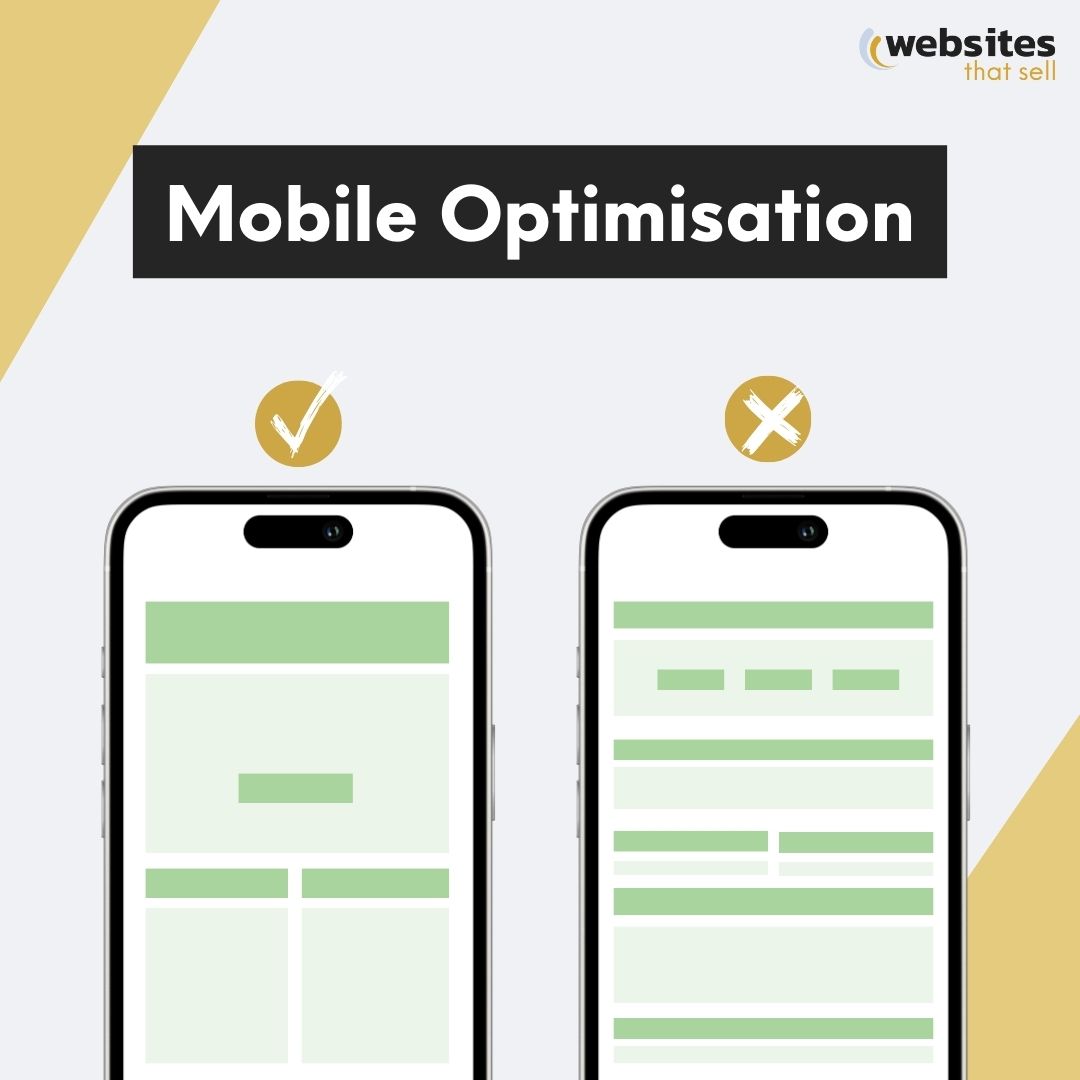
Here's the big one: Google uses mobile-first indexing. It checks everything on mobile devices or mobile simulations.
If you're going to optimise anything technical, make it mobile-oriented. Start there, not with the desktop.
We see businesses spend hours perfecting their desktop experience while their mobile site is a mess. That's backwards. I get why it happens - most people probably build on a desktop and test on a desktop. But Google doesn't care about that.
Google judges your site based on the mobile version. Start there.
The Technical Basics Checklist
Focus on these core areas:
Site security. Is your site vulnerable? Could it download malicious code? Is it full of spam or hacked content? If yes, fix it immediately. Google won't rank sites that hurt users. That's a hard line for them.
Site structure. Can Google easily crawl and understand your site? Is your internal linking logical? Or is everything buried five clicks deep?
Loading speed. Fast sites give better user signals. People don't wait for slow pages to load. They click back to search results. We all do it.
Mobile responsiveness. Does your site work properly on phones and tablets? Does it look broken, or does it adapt?
Basic errors. Fix broken links, missing images, and duplicate content issues.
Don't overthink this. Ask yourself: Is my site easy to use? Is it safe? Does it work on mobile?
If yes, you're probably fine on technical SEO. If no, well, you've got work to do.
When Technical Matters Most
Technical optimisation becomes more important in competitive industries. When you're competing against sites that have good content, strong backlinks, and proper optimisation, technical factors become the tiebreaker.
For 80% of businesses (especially local ones), technical SEO is about removing friction. Make sure nothing actively hurts the user experience. Then focus your energy on content and optimisation. That's where you'll see better returns on your time.
Where to Start: The 3 Things That Matter Most
You understand the ranking factors now. But where do you actually start?
Here's the priority order that works across thousands of sites:
1. Nail Your Relevance
Know exactly what keyword you want to rank for. Then create content that matches the search intent for that keyword.
Look at what's already ranking. Match the content type. Answer the question directly. Don't try to be clever about it.
This is the foundation. Get this wrong, and nothing else matters. I know I keep saying that, but it's true. We've seen so many sites struggle because they skip this step.
2. Optimise It Properly
Once you have relevant content, optimise it the traditional way.
Title tag with your keyword. H1 that matches. Proper image alt text. Clean URL structure.
This is SEO 101 stuff. But it still works. In many local industries, this alone gets you into the top three. Not always, but often enough that it's worth doing first.
3. Build Basic Authority
If you don't have technical expertise or a development team, start with basic authority building.
Get your Google Business Profile set up. Create social media pages. Get listed on citation sites and local directories.
These signals show Google you're a real, legitimate business. It's foundational stuff.
For local businesses, these three steps are often enough. Do them well, give it 3-6 months, and you'll rank. Maybe not number one, but you'll be visible.
The Four Buckets Framework

If you want a mental model for all of SEO, think of it in four buckets:
Relevance. Does your content match what people are searching for?
Optimisation. Are you sending clear signals about what your page is about?
Authority. Do other sites recognise you as legitimate and trustworthy?
Technical. Does your site work properly on mobile and provide a good user experience?
You don't need to learn 200+ ranking factors. Focus on these four areas. Everything else falls into them.
You can go deeper in each bucket. There is research about semantic content structure and advanced optimisation techniques. But if you're just getting started, these four buckets cover what matters. Start here, then expand if you need to.
The Reality About Ranking Factors
Google's algorithm is complex. But understanding it doesn't have to be.
The ranking factors haven't fundamentally changed in years. Google just adjusts the filters to control how much each factor matters. Sometimes dramatically, sometimes barely at all.
Focus on the basics. Do them consistently. Give it time. I know that's not exciting advice, but it's honest.
Most businesses over-complicate SEO. They chase marginal gains while ignoring fundamentals. They try to optimise for hundreds of factors instead of mastering four core areas. Then they wonder why nothing's working.
Start with relevance. Make sure your content matches search intent. Optimise it properly. Build basic authority. Fix obvious technical issues.
That's enough for most businesses to rank well in their industry.
The advanced stuff matters when you're competing in highly competitive spaces. But for the majority of sites, doing the basics well beats chasing every new ranking factor. I've seen it play out too many times to think otherwise.